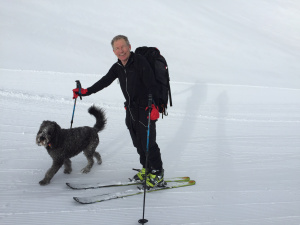
The question I get the most is about training. How does one train to climb Mt. Everest? It was foremost in my mind when I decided to do it a little more than a year ago. I studied various well-planned and thought-out programs from reputable guide companies, and decided on one from Alpine Ascents that I tweaked to fit me.
I’d just spent several months with a physical therapist getting over a chronic case of plantar fasciitis, so I was very careful not to undo all of that. As a matter of interest, I was trying to fast track preparations for an attempt on Denali by spending several weeks running in a swimming pool. Though that trip fell through, it was a good start for Everest training.
One of the key goals, regardless of how one gets there, is to reach a point where the body can endure back-to-back days of strenuous climbing at high altitudes. So, to be more specific, most of the recommendations I studied suggested being able to carry 60-or-so pounds up 4,000 feet on any given day, followed by another 40 pounds up 3 or 4,000 feet the next day – and that with little to no physical after effects, such as being overly tired or injured, etc. I peaked two months early and increased both my pack weight and elevation gain by 10-15 percent. I spent time during the week in a gym doing everything from interval training on the gauntlet with a 65-pound pack to one-hour-tempo training at 90 percent heart rate, breathing only through my nose. I also worked on daily strength training targeting upper, lower, and core exercises. I did some yoga, as well, just to mix things up. I tried to force myself through mental barriers to simulate what I’d undoubtedly encounter on the mountain. I also rented an altitude tent for two months, designed to build my red blood cell count and ability to move oxygen through my body more efficiently.
I’ve felt like a kid at Christmas for a year! It has surprised me how fun it has been working out and getting into the shape of my life with a fun and interesting and exciting goal in mind!
 Mt. Everest